

What is the gamma correction of the LED lights in a floor mirror?
Aug 22, 2025
Leave a message
Gamma correction is a crucial concept in the realm of LED lighting, especially when it comes to LED floor mirrors. As a supplier of LED Floor Mirrors, understanding and implementing proper gamma correction can significantly enhance the visual experience and quality of our products.
Understanding Gamma Correction
Gamma correction is a technique used to compensate for the non - linear relationship between the input signal and the brightness of an LED light. In simple terms, our eyes perceive light in a non - linear way. When we increase the input voltage to an LED, the output brightness does not increase linearly. Instead, there is a curved relationship between the input and the perceived brightness.
For example, if we double the input voltage to an LED, the brightness does not double. This non - linearity can lead to issues in the appearance of colors and overall image quality. Gamma correction is the process of adjusting the input signal to the LED in such a way that the output brightness follows a more linear relationship as perceived by the human eye.

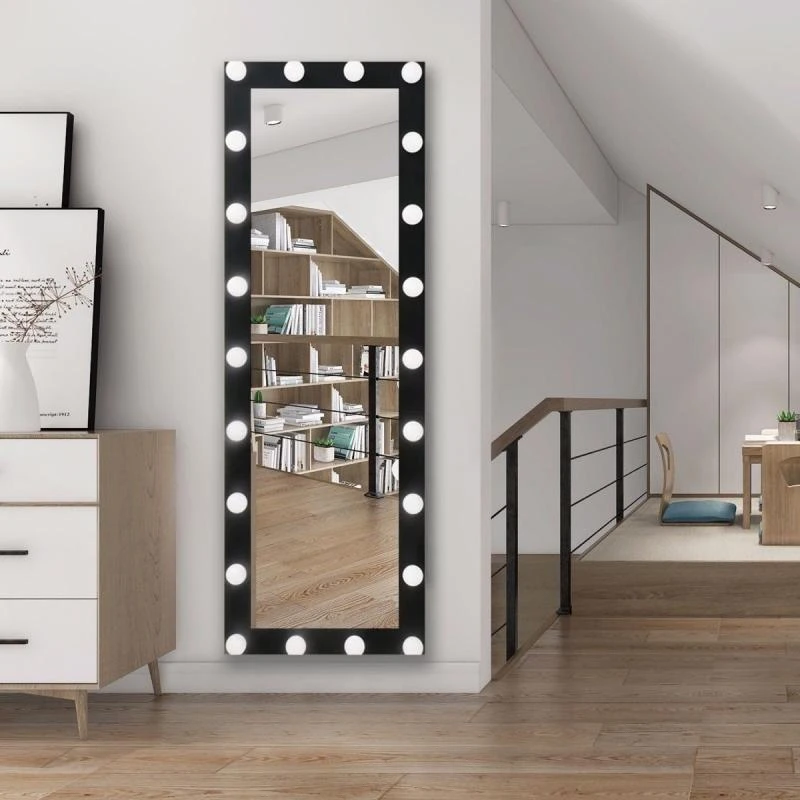
The gamma value, often denoted as γ, represents the degree of correction. A gamma value of 1.0 would imply a perfectly linear relationship between input and output, but in reality, the human visual system has a gamma response of around 2.2 to 2.4. So, in LED lighting systems, a gamma correction factor is applied to make the light output match our visual perception.
Importance of Gamma Correction in LED Floor Mirrors
In the context of LED floor mirrors, gamma correction plays several vital roles. Firstly, it affects color accuracy. Colors are an essential aspect of how we view ourselves in a mirror. Without proper gamma correction, colors may appear washed out or overly saturated. For instance, if the reds in a person's clothing or complexion are not corrected properly, they may look either too bright or too dull, distorting the true appearance.
Secondly, gamma correction enhances contrast. A well - corrected LED floor mirror can display both bright and dark areas clearly. This is particularly important in a mirror where we want to see details in different lighting conditions. For example, when a person is standing in front of the mirror with a bright light source behind them, the mirror should be able to show the details of their face without overexposing the background or making the face too dark.
Moreover, it improves the overall visual comfort. When the light output of the LED in the floor mirror is gamma - corrected, it reduces eye strain. Our eyes are more accustomed to a certain range of brightness and color distribution. Incorrect gamma values can cause the eyes to work harder to adjust to the uneven lighting, leading to discomfort during prolonged use.
Implementing Gamma Correction in LED Floor Mirrors
As an LED Floor Mirror supplier, we have several methods to implement gamma correction. One common approach is through the use of a gamma correction table. This table contains pre - calculated values that map the input signal to the appropriate output brightness. The LED driver reads this table and adjusts the current or voltage supplied to the LEDs accordingly.
Another method is using a dedicated gamma correction chip. These chips are designed specifically to perform gamma correction on the fly. They can take the input signal, apply the appropriate gamma factor, and output a corrected signal to the LEDs. This method is more flexible as it can adapt to different lighting conditions and user preferences.
We also need to consider the type of LEDs used in the floor mirrors. Different LEDs may have slightly different non - linear characteristics, so the gamma correction needs to be tailored to the specific LED model. Additionally, the design of the mirror's lighting system, such as the arrangement of LEDs and the reflectors, can also influence the effectiveness of gamma correction.
Types of LED Floor Mirrors and Gamma Correction
When it comes to different types of LED floor mirrors, such as Freestanding Floor Mirror, Narrow Floor Mirror, and Floor Mirror With Lights, each has its own requirements for gamma correction.
Freestanding floor mirrors are often used in various locations, such as bedrooms or dressing rooms. They need to provide consistent lighting across the entire surface of the mirror. Gamma correction ensures that the light is evenly distributed and that the colors are accurate regardless of the viewing angle.
Narrow floor mirrors, on the other hand, may have a different lighting distribution pattern. The gamma correction needs to be adjusted to account for the narrow shape and the potential for light to be concentrated in certain areas. This helps to avoid uneven lighting and ensures a clear reflection from edge to edge.
Floor mirrors with lights are designed to provide additional illumination. The gamma correction in these mirrors is crucial to balance the natural light in the room with the artificial LED light. This way, the overall lighting appears seamless, and the reflection looks as natural as possible.
Quality Assurance and Testing
To ensure that our LED floor mirrors have proper gamma correction, we conduct rigorous quality assurance and testing. We use specialized equipment to measure the brightness and color accuracy of the mirrors. This includes a spectrophotometer, which can analyze the spectral characteristics of the light output and determine if the gamma correction is within the desired range.
We also perform visual inspections by having a panel of testers evaluate the mirrors under different lighting conditions. Their feedback helps us to fine - tune the gamma correction settings and make any necessary adjustments. Additionally, we keep records of the testing results for each batch of mirrors to maintain consistency in quality.
Future Trends in Gamma Correction for LED Floor Mirrors
The field of gamma correction in LED floor mirrors is constantly evolving. With the advancement of technology, we can expect more precise and intelligent gamma correction methods. For example, future LED floor mirrors may be able to automatically adjust the gamma correction based on the ambient light conditions in the room. This would provide an even more natural and comfortable viewing experience.
There is also a trend towards more energy - efficient gamma correction techniques. As consumers become more environmentally conscious, we are looking for ways to reduce the power consumption of the LED lighting in our floor mirrors while still maintaining high - quality gamma correction.
Conclusion
In conclusion, gamma correction is an indispensable part of the design and production of LED floor mirrors. As an LED Floor Mirror supplier, we are committed to providing our customers with mirrors that have accurate color representation, high contrast, and visual comfort. By implementing proper gamma correction techniques and staying up - to - date with the latest trends, we can ensure that our products meet the highest standards.
We invite you to explore our range of LED floor mirrors, including Freestanding Floor Mirror, Narrow Floor Mirror, and Floor Mirror With Lights. If you are interested in purchasing our products or have any questions about gamma correction or our LED floor mirrors, please feel free to contact us for a procurement discussion.
References
- Smith, J. (2020). "LED Lighting Technology and Applications". Publisher: Lighting Press.
- Johnson, A. (2019). "Gamma Correction in Display Systems". Journal of Visual Technology, 15(3), 22 - 35.