

How to check if a flannel frame mirror is properly balanced when hanging?
Jan 20, 2026
Leave a message
As a supplier of flannel frame mirrors, ensuring that our products are properly balanced when hanging is of utmost importance. A balanced mirror not only enhances the aesthetic appeal of the space but also guarantees safety and longevity. In this blog post, I'll share some practical tips on how to check if a flannel frame mirror is properly balanced when hanging.
Understanding the Basics of Balance
Before we delve into the checking process, it's essential to understand what balance means in the context of a hanging mirror. A balanced mirror is one that hangs straight and level on the wall without any visible tilt or wobble. This is crucial because an unbalanced mirror can create a distorted reflection, make the space look unprofessional, and even pose a safety risk if it falls off the wall.

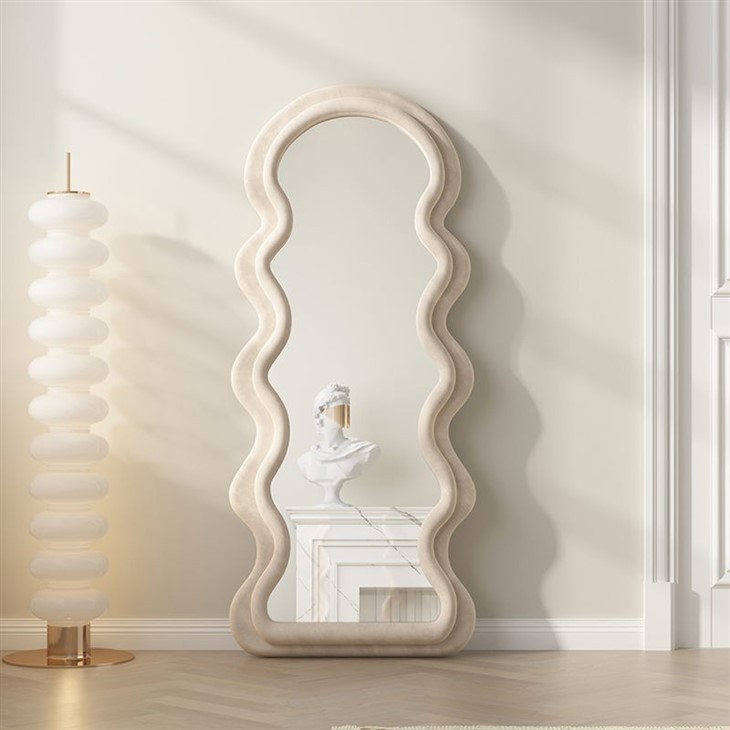
Tools You'll Need
To check the balance of a flannel frame mirror, you'll need a few basic tools:
- Level: A spirit level is a must-have tool for this task. It helps you determine if the mirror is perfectly horizontal or vertical.
- Measuring Tape: This will come in handy to measure the distance between the mirror and the wall at different points to ensure even spacing.
- Pencil: You'll use a pencil to mark the wall where the mirror will be hung and to note any adjustments that need to be made.
Step 1: Prepare the Wall and Mirror
Before hanging the mirror, make sure the wall is clean and free of any debris. Use a damp cloth to wipe the wall surface and allow it to dry completely. Next, inspect the mirror for any damage or defects. Check the frame for cracks, chips, or loose parts, and ensure that the mirror glass is intact.
Step 2: Mark the Hanging Points
Using a measuring tape and a pencil, mark the exact location on the wall where you want to hang the mirror. Make sure the marks are level by using a spirit level. If the mirror has multiple hanging points, ensure that they are evenly spaced and aligned.
Step 3: Hang the Mirror
Carefully hang the mirror on the wall using the appropriate hardware. Make sure the mirror is centered on the marks you made earlier. If the mirror is heavy, it's a good idea to have someone assist you to prevent any accidents.
Step 4: Check the Horizontal Balance
Once the mirror is hung, use a spirit level to check if it is perfectly horizontal. Place the level on top of the mirror frame and adjust the mirror until the bubble in the level is centered. If the mirror is tilted, gently loosen the hanging hardware and make the necessary adjustments.
Step 5: Check the Vertical Balance
In addition to checking the horizontal balance, it's also important to ensure that the mirror is vertically straight. Place the spirit level on the side of the mirror frame and check for any tilt. If the mirror is not vertical, adjust the hanging hardware accordingly.
Step 6: Check the Distance from the Wall
Use a measuring tape to check the distance between the mirror and the wall at different points. The distance should be consistent all around the mirror to ensure a uniform appearance. If the distance varies, it may indicate that the mirror is not properly balanced.
Step 7: Test for Wobble
Gently tap the mirror with your hand to check for any wobble. A properly balanced mirror should not move or shake when tapped. If you notice any wobble, it could be a sign that the mirror is not securely attached to the wall or that the hanging hardware is loose.
Step 8: Make Adjustments
If you find that the mirror is not properly balanced, make the necessary adjustments. This may involve tightening or loosening the hanging hardware, repositioning the mirror on the wall, or adding additional support. Once you've made the adjustments, repeat the balance checks to ensure that the mirror is now properly balanced.
Common Issues and Solutions
- Uneven Frame: If the mirror frame is uneven, it can cause the mirror to hang at an angle. To fix this, you can use shims or spacers to level the frame before hanging the mirror.
- Loose Hanging Hardware: Over time, the hanging hardware may become loose, causing the mirror to wobble or tilt. Check the hardware regularly and tighten any loose screws or bolts.
- Wall Surface Issues: If the wall surface is not flat or level, it can affect the balance of the mirror. In this case, you may need to use a wall anchor or a mounting plate to ensure a secure and level installation.
Conclusion
Checking if a flannel frame mirror is properly balanced when hanging is a simple yet crucial step in ensuring a professional and safe installation. By following the steps outlined in this blog post and using the right tools, you can easily determine if your mirror is balanced and make any necessary adjustments. At our company, we take pride in providing high-quality flannel frame mirrors that are designed to hang perfectly every time. If you're in the market for a new mirror, we invite you to explore our collection of Irregular Wavy Mirror, Wavy Frame Mirror, and Wavy Floor Mirror. If you have any questions or would like to discuss your specific needs, please don't hesitate to contact us for a procurement discussion.
References
- Home Improvement Handbook
- Mirror Installation Guide