

Can large gym mirrors be used in a functional training area?
Sep 22, 2025
Leave a message
In the ever - evolving landscape of fitness facilities, the functional training area has emerged as a dynamic and essential space. It caters to a wide range of workouts, from high - intensity interval training (HIIT) to strength and mobility exercises. One question that often arises among fitness facility owners, trainers, and enthusiasts is whether large gym mirrors can be effectively used in a functional training area. As a supplier of Large Gym Mirror, I am well - positioned to explore this topic in depth.
The Role of Mirrors in a Gym
Before delving into the specific application of large gym mirrors in functional training areas, it's important to understand the general role of mirrors in a gym setting. Mirrors serve multiple purposes. Firstly, they provide visual feedback to users. When someone is performing an exercise, they can check their form, alignment, and range of motion. Correct form is crucial not only for maximizing the effectiveness of the workout but also for preventing injuries. For example, in weightlifting, proper form ensures that the targeted muscles are engaged correctly, and the risk of back or joint injuries is minimized.
Secondly, mirrors can create an illusion of space. In a gym, especially one with limited square footage, mirrors can make the area appear larger and more open. This psychological effect can enhance the overall user experience, making the gym feel less cramped and more inviting.
Suitability of Large Gym Mirrors in Functional Training Areas
Positive Aspects
Enhanced Form Correction
Functional training often involves complex, multi - joint movements. Exercises like kettlebell swings, burpees, and box jumps require precise coordination and form. Large gym mirrors provide a comprehensive view of the entire body during these movements. Trainers can use the mirrors to demonstrate proper technique to clients, and clients can self - assess their form in real - time. For instance, when performing a kettlebell swing, a user can see if their hips are hinging correctly, if their back is straight, and if their arms are following the right path. This immediate visual feedback can significantly improve the quality of the workout and reduce the likelihood of injury.
Motivation and Performance
The sight of oneself working out can be motivating. In a functional training area, where workouts are often intense and challenging, the presence of large mirrors can encourage users to push themselves harder. When people see their muscles working and their progress over time, it can boost their confidence and self - esteem. Moreover, in group functional training sessions, the mirrors allow participants to see others around them, creating a sense of community and healthy competition. This can lead to increased effort and better workout results.
Space Utilization
Functional training areas typically have a lot of equipment and open floor space. Large mirrors can be strategically placed to make the most of the available space. They can be installed on the walls opposite the main workout area, effectively doubling the apparent size of the space. This is particularly beneficial in smaller functional training studios where space optimization is crucial.
Potential Challenges
Safety Concerns
Functional training involves a lot of fast - paced, high - impact movements. There is a risk of equipment or the user accidentally hitting the mirror. For example, during a medicine ball throw or a rope skipping session, there is a chance that the ball or rope could strike the mirror, causing it to shatter. To mitigate this risk, it is essential to use safety - backed mirrors. These mirrors are designed with a protective layer that holds the glass together in case of breakage, reducing the danger of flying shards.
Clutter and Distraction
Functional training areas are usually filled with various pieces of equipment, such as dumbbells, resistance bands, and agility cones. The large mirrors can reflect all this clutter, creating a visually busy environment. This can be distracting for some users, especially those who prefer a more minimalist workout space. To address this issue, the layout of the functional training area should be carefully planned. Equipment should be stored neatly, and the mirrors should be positioned in a way that minimizes the reflection of unnecessary clutter.

Types of Mirrors for Functional Training Areas
Framed Gym Mirrors
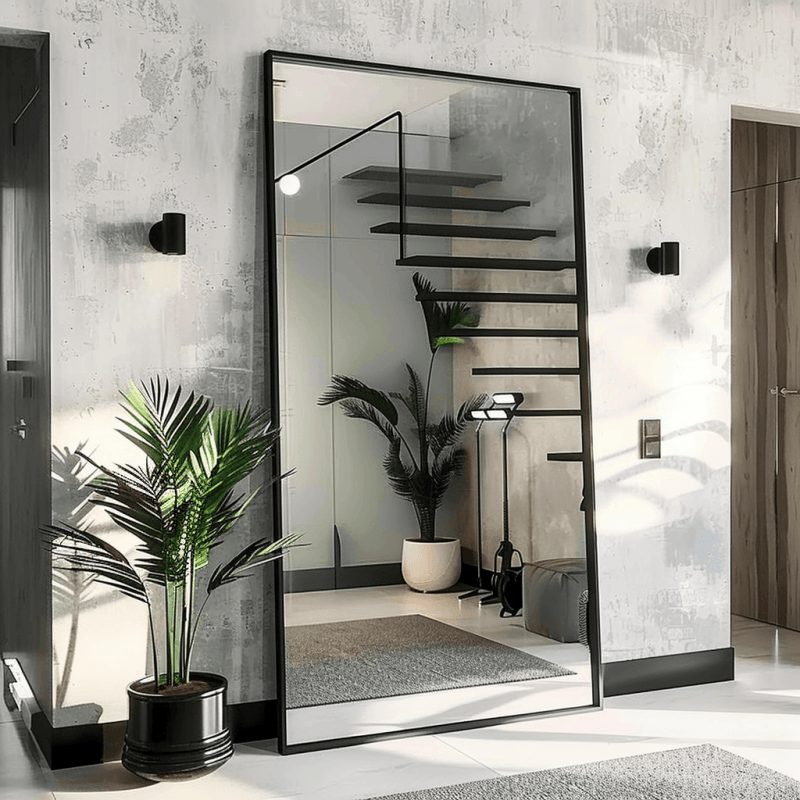
Framed Gym Mirrors offer both aesthetic appeal and practicality. The frame provides additional stability and protection to the mirror. It can also be customized to match the decor of the functional training area. For example, a modern - style gym might opt for a sleek, metal - framed mirror, while a more rustic - themed facility could choose a wooden frame. Framed mirrors are also easier to install and can be hung on the wall using standard hardware.
Home Gym Mirrors
For smaller functional training areas or home - based gyms, Home Gym Mirrors are a great option. They come in a variety of sizes and styles, and they are often more affordable than large, commercial - grade mirrors. Home gym mirrors can still provide the benefits of form correction and space enhancement, making them suitable for individual functional training sessions.
Installation Considerations
When installing large gym mirrors in a functional training area, several factors need to be considered. The height of the mirror is crucial. It should be installed at a height that allows users of different heights to see their entire body. A general rule of thumb is to install the mirror with the bottom edge at around 6 - 8 inches above the floor.
The location of the mirror is also important. It should be placed in an area where it does not interfere with the flow of traffic or the movement of equipment. For example, it should not be installed directly in front of a doorway or in a path where people are likely to run or jump.
Maintenance of Large Gym Mirrors
Proper maintenance is essential to ensure the longevity and functionality of large gym mirrors. Regular cleaning is necessary to remove sweat, dirt, and fingerprints. A non - abrasive glass cleaner and a soft cloth should be used to avoid scratching the mirror surface.
In addition, the mirrors should be inspected regularly for any signs of damage, such as cracks or chips. If damage is detected, it should be repaired or replaced immediately to prevent safety hazards.
Conclusion
Large gym mirrors can be a valuable addition to a functional training area. They offer numerous benefits, including enhanced form correction, motivation, and space utilization. However, it is important to address the potential challenges, such as safety and distraction, through proper installation, selection of safety - backed mirrors, and careful layout planning.
As a supplier of Large Gym Mirror, I understand the unique requirements of functional training areas. We offer a wide range of high - quality mirrors, including Framed Gym Mirror and Home Gym Mirror, to meet the diverse needs of gym owners and fitness enthusiasts. If you are considering adding large gym mirrors to your functional training area, I encourage you to contact us for a consultation. We can help you select the right mirrors, provide professional installation services, and offer guidance on maintenance. Let's work together to create a functional training area that is both safe and effective.
References
- "The Psychology of Mirrors in Gym Design" - Journal of Fitness Facility Management
- "Safety Considerations for Gym Mirrors" - National Institute for Fitness and Sports Safety
- "Functional Training: Principles and Practice" - American Council on Exercise